

Burnout therapy in English - Warsaw and online
You rest, but the exhaustion doesn't go away? It may be burnout.
If a weekend, a holiday or a lighter week no longer restores you, the problem usually isn't that you haven't rested enough. At Liberté Instytut Psychoterapii we start with a thorough assessment, and then work on what makes your work so absorbing and so draining - so that you regain calm, clear thinking and freedom in your decisions.
At Liberté, burnout is treated by psychotherapists who spent years managing teams in corporations and business themselves - we know how decision pressure works, in practice and from the inside.
Session in English PLN 300 · Al. Wyzwolenia 9/29, Warsaw (Plac Zbawiciela) and online
Do you recognise these signs?
Tiredness that rest doesn't fix.
You wake up tired before the day has even started. A weekend or a holiday brings relief for a moment, or not at all - and once it's over, the sense of being overwhelmed comes back twice as hard.
Distance and irritation.
Things that used to engage and drive you now wear you out or make you angry. People at work - and their enthusiasm - irritate you more and more, and you withdraw further.
A sense that your work makes no difference.
You keep working more, yet feel you're doing less and achieving less. You start to doubt your skills, your knowledge and your judgement, and every decision costs more than it used to.
Signals from your body.
You sleep worse, find it harder to focus, and headaches, tension or heart palpitations keep coming back. The symptoms appear or get worse in specific work-related situations.
If you recognise several of these signs and feel they've been with you for a while (a few weeks or more), this is a good moment to talk to a specialist. We know what it looks like from the inside, how hard it is to admit it to yourself - and we know where to start.
What is burnout?
Burnout is a state of chronic exhaustion that develops when stress at work lasts too long and can't be released. The World Health Organization describes it in the ICD-11 classification (code QD85) as an occupational phenomenon, not a medical condition. It has been studied most thoroughly by Professor Christina Maslach of the University of California, Berkeley, co-author of the most widely used burnout questionnaire in the world.
In everyday life, burnout has three faces:
- 1
Running on empty.
It isn't ordinary tiredness, but the feeling that there's nothing left to draw on. You sense you're slowly reaching your limits, and even small things feel like too much. (Clinical term: exhaustion.)
- 2
Distance from work and people.
You notice you've stopped caring about results and relationships at work - coldness, irony or indifference creep in. This is how your mind protects itself from further overload. (Cynicism, mental distance.)
- 3
A sense that nothing you do really matters.
You lose faith in your own effectiveness and in the point of what you do - even when everything looks fine from the outside and your work is rated well. You feel the quality of your work is slipping. (Reduced professional efficacy.)
Burnout most often affects people who are highly committed, responsible and demanding of themselves. It usually comes from two things: working conditions (too many tasks, pressure, little influence over decisions) and your own habits - perfectionism, a need for control, difficulty saying no. That's why, to achieve real change, therapy addresses both.


How burnout usually builds up
Burnout rarely arrives suddenly or out of nowhere, but we often mask its symptoms, refusing for a long time to admit that something is wrong. What does it look like in practice?
01
Overload
You take on more and more because you feel the weight of responsibility - you don't say no and don't ask for help, even when the situation starts to overwhelm you.
02
Giving up on yourself
To cope, you gradually cut back on sleep, exercise and seeing friends, because "there's no time for that right now" - work becomes the priority.
03
First symptoms
Irritability, insomnia, trouble concentrating and a growing sense of helplessness set in.
04
Exhaustion
What remains is distance, emptiness and difficulty making even simple decisions.
This process can be stopped at any stage - and the sooner you decide to start working on it, the better the chance of avoiding its consequences, such as depression or losing your job.
See which stage you're at - take the test13 statements · a few minutes · instant result · free
Check whether it might be burnout - online test
The Liberté burnout test is based on the three dimensions of burnout described by the WHO in the ICD-11 classification: exhaustion, distance from work and reduced sense of effectiveness. For each statement, you mark how often it applied to you over the past 4-6 weeks. At the end, you get your result with a recommendation on what to do next.
Take the burnout testThe test is a preliminary self-assessment, not a diagnosis. A diagnosis is made by a specialist in a clinical interview.
Question 1 / 13
You wake up in the morning lacking the energy required to make ongoing managerial decisions.
Burnout, ordinary tiredness or depression?
Tiredness
Tiredness goes away after rest.
Burnout
Burnout is tied to work: outside of it you can still enjoy many things, but the tension returns as soon as you go back to your responsibilities.
Depression
Depression affects every area of your life: low mood and loss of pleasure also show up in your relationships and your free time, swallowing everything that used to bring you joy.
These states often overlap and the symptoms can look alike. That's why we always start with an assessment - it determines what the help will look like.
Untreated burnout can turn into depression over time.
Why rest or coaching alone isn't enough

A holiday and rest bring a feeling of recovery. But if you go back to the same responsibilities - or to a new job - with the same habits, the tension usually comes back.
Coaching and productivity training help you organise your time better. They don't address why it's so hard for you to let go, ask for help, say no or hand over control.
Psychotherapy reaches the deeper mechanisms that keep the overload going. It also gives you concrete resources to set boundaries, share responsibility and rest without guilt.

How we work with burnout at Liberté
- 01
Assessment first.
We start with a clinical interview and standardised questionnaires (including the OLBI - Oldenburg Burnout Inventory). This gives you a clear understanding of the main problem and the stage you're at. You'll find out whether you're dealing with burnout, depression, anxiety or a combination - and even if you decide not to continue therapy, you'll be able to name the problem precisely.
- 02
Methods with proven effectiveness.
We use methods whose effectiveness has been confirmed in clinical trials: cognitive behavioural therapy (CBT) and psychodynamic psychotherapy (including TFP). Both approaches are recommended in clinical guidelines, including those of the UK's NICE, for treating depression and anxiety disorders, which often accompany burnout.
- 03
Clear goals and progress reviews.
After the assessment, we agree on concrete goals together - what should change and how you want to function after therapy. During the process, we regularly review the direction of change and whether your goals are still relevant.
- 04
Medical support when needed.
If burnout comes with severe insomnia, symptoms of depression or physical complaints, we say so directly and refer you to trusted psychiatrists who specialise in burnout and depression. The doctor will assess whether medication or sick leave is needed, and therapy with us can continue in parallel.
Who at Liberté specialises in burnout

Karolina Misztal
Founder of Liberté Instytut Psychoterapii and a qualified psychodynamic psychotherapist (TFP). She spent over 10 years in managerial roles at international corporations (including Procter & Gamble, AB InBev, Diageo and Philip Morris International) and also has experience as an entrepreneur and startup founder. She works with founders, executives and successors in family businesses, specialising in leaders' decision overload and burnout. Sessions in English and Polish.
View Karolina's profile →
Monika Zielińska
Psychologist and cognitive behavioural (CBT) psychotherapist, having completed the 2nd year of a four-year psychotherapy training programme. In her work she uses schema therapy techniques. Before that, she spent years in transaction advisory and management (including at Savills). She works with burnout and work-related stress, anxiety and insomnia. Sessions in English and Polish.
View Monika's profile →
Qualifications, ethics and discretion
- Qualifications. Everyone who works at Liberté is a psychologist who has completed at least the 2nd year of a four-year psychotherapy training programme at a centre accredited by a Polish professional body (the Polish Psychological Association or the Polish Association for Cognitive and Behavioural Therapy), with the clinical experience and competence needed to practise psychotherapy.
- Supervision. Every therapy process is regularly supervised by certified supervisors.
- Ethics. We are bound by professional confidentiality and by the ethical codes of psychologists and psychotherapists. We respect your time and money - if the assessment shows that a different format, a different approach or a different specialist would be a better fit, or that additional diagnostics are needed elsewhere, we say so directly and refer you to a specific, trusted person.
- Discretion. What you share in sessions and your personal data remain confidential - including from your employer if you come through a company programme (EAP).
- Understanding business realities. We know first-hand what it means to work under pressure for results, to be responsible for a team and to make decisions that can't be postponed. We speak your language and understand how much processes, KPIs and targets shape your work - and how much tension they create.
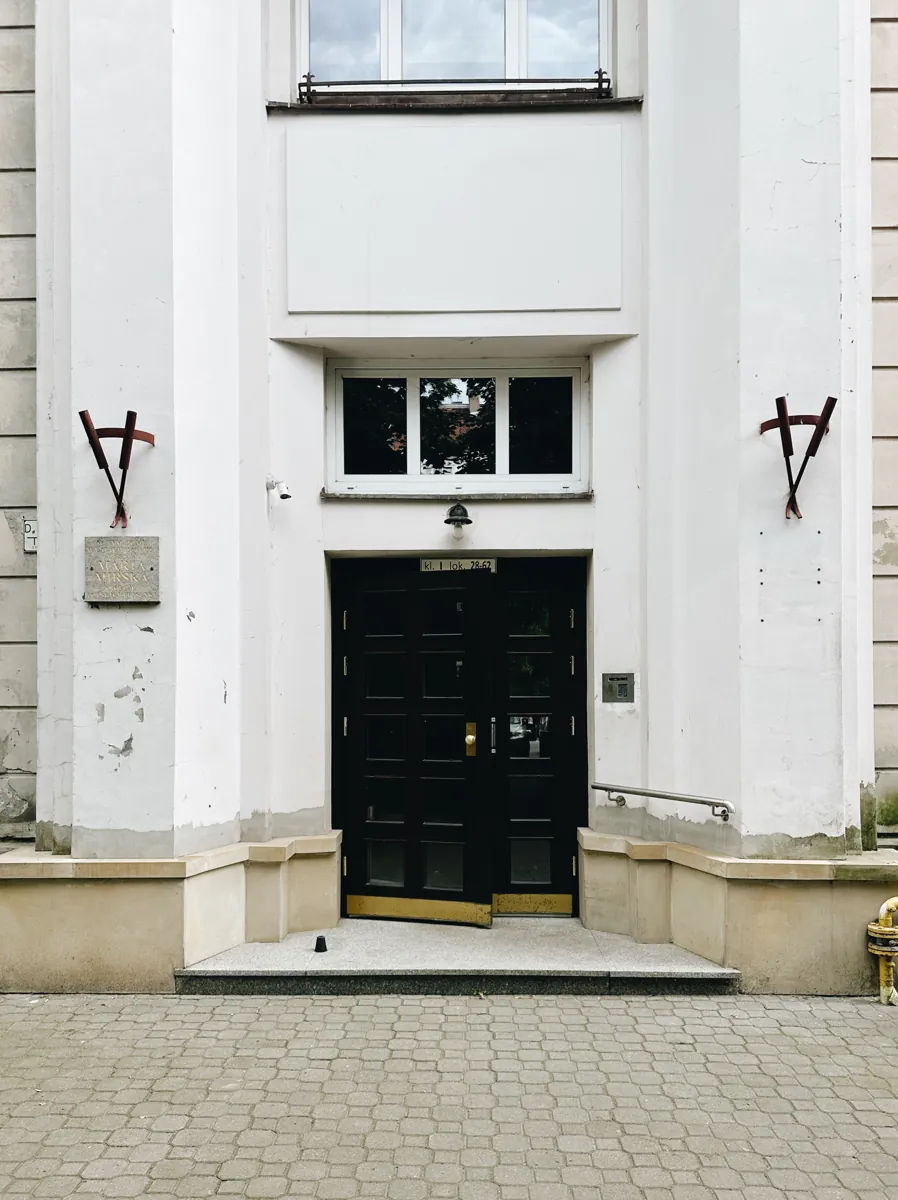
How to start and what it costs

- 01
Free phone consultation (approx. 20 min).
You briefly describe your situation, and we match you with the right specialist and session language.
- 02
Assessment (the first few sessions).
Interview and questionnaires. Together we define what we're working on and what the goal is.
- 03
Regular sessions.
Usually once a week, in person near Plac Zbawiciela or online. Every so often we review progress together.
| Service | Price |
|---|---|
| Psychotherapy session in English (50 min) | PLN 300 |
| Phone consultation (approx. 20 min) | free |
Looking for help for your team or a programme for your company? See our offer For business
FAQ
Frequently asked questions about burnout therapy
How much does burnout therapy in English cost in Warsaw?
At Liberté Instytut Psychoterapii, a 50-minute session in English costs PLN 300. The first phone conversation (approx. 20 minutes) is free - it helps assess whether it's burnout and where to start.
Can I have therapy in English with a qualified therapist in Warsaw?
Yes. Both specialists who work with burnout run sessions in English, in person in central Warsaw and online. Many of the people we work with are international professionals and expats living in Warsaw.
How long does burnout therapy take?
We estimate the length after the assessment - it depends on how long the overload has lasted and whether other difficulties, such as depression or anxiety, come with it. We don't promise results after a set number of sessions. We promise a clear goal, full commitment to the process and regular progress monitoring. Whether therapy brings change matters as much to us as it does to you.
Can I get sick leave (L4) for burnout in Poland?
Sick leave (zwolnienie lekarskie, known as L4) is issued by a doctor, for example a psychiatrist or a GP, not by a psychotherapist. The doctor assesses whether your health allows you to work. If we see that a medical consultation is needed, we tell you directly and help you plan the next steps.
How is burnout different from depression?
Burnout is mainly tied to work, while depression affects every area of life - including relationships and free time. The two often overlap, which is why therapy starts with an assessment.
How is burnout therapy different from coaching?
Coaching focuses on goals, performance and working with your resources. Psychotherapy reaches the deeper mechanisms that led to exhaustion - such as difficulty letting go or a need for control - and allows you to change, for good, the way you respond to pressure.
Do you work with managers, founders and business owners?
Yes, they make up a large part of the people we work with. Our offer for companies and consultations for executives are described in For business.
Will my employer find out about my therapy?
No. Confidentiality is our priority. We are bound by strict professional confidentiality - we don't share who is in therapy, what its goals are or what is said in sessions. Even within company programmes, your employer receives no information about the content or course of your sessions.
Are sessions in person or online?
Both. Our practice is at Al. Wyzwolenia 9/29 in Warsaw (Śródmieście, Plac Zbawiciela). Online sessions take place via video-call platforms.
Let's talk about what's wearing you out
A 20-minute conversation is enough to assess whether it may be burnout and decide where to start. No commitment.
Free · approx. 20 minutes · EN / PL
or call: +48 797 545 988